This is general health information checked against veterinary sources. It isn't a diagnosis or a substitute for advice from a veterinarian who knows your cat. If your cat may be ill or poisoned, call your vet or the ASPCA Animal Poison Control Center at (888) 426-4435 (a fee may apply).
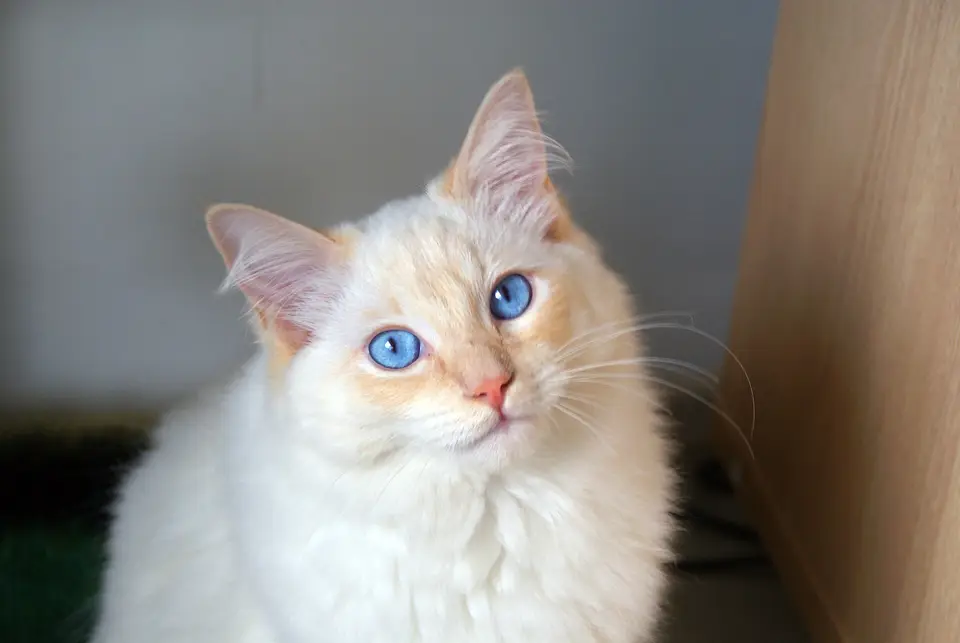
Ragdolls have a reputation as gentle giants: large, soft-coated cats that would rather lounge near their people than climb the curtains. That reputation is largely earned, but a calm temperament also means a tendency to put on weight, and the breed carries a known inherited heart risk. This guide covers what to expect and how to find a healthy Ragdoll.
Ragdoll quick facts
| Trait | What to expect |
|---|---|
| Origin | Riverside, California, 1960s, developed by breeder Ann Baker from domestic longhaired cats; CFA championship status in 2000 (CFA) |
| Weight | Mature males can reach or exceed 20 lbs; females are usually smaller (CFA) |
| Coat | Semi-long, mostly guard hairs with little or no undercoat; soft and silky (CFA) |
| Lifespan | VCA lists 15–25 years (VCA); a 2025 UK study of 133 Ragdolls that died found a median age at death of 12.85 years (O'Neill et al.) |
| Activity level | Moderate: enjoys play but doesn't insist on it (CFA) |
| Grooming | Comb once or twice a week with a steel comb; seasonal shedding (CFA) |
| Maturity | Slow to mature; full coat color around two years and full size and weight around four (CFA) |
The two lifespan figures differ a lot. VCA's range is a general guide, while the UK figure comes from actual veterinary records and is probably the more realistic expectation for a typical cat. Many Ragdolls live longer.
Temperament
The Cat Fanciers' Association describes Ragdolls as docile, placid and affectionate: loving, gentle, calm, sociable and trainable. CFA notes they are rarely aggressive, which is a big part of their appeal for households with children or other pets, though existing cats and dogs should still be introduced carefully. VCA Animal Hospitals rates them as quiet, relaxed lap cats.
A laid-back cat still needs to feel safe. A Ragdoll that is frightened or in pain may hide or swat like any other cat. Our guide to cat body language helps the whole family read the signals.
Care needs
Grooming. Because the Ragdoll coat has little undercoat, CFA says it sheds and mats less than many long coats. A weekly or twice-weekly comb-through, with extra attention during seasonal shedding, usually keeps it in good shape.
Weight management. This is the big one. CFA warns that Ragdolls love food and may be at risk of obesity, and VCA notes they are not especially active. In a 2025 study of more than 21,000 Ragdolls in UK veterinary care, obesity was among the three most common diagnoses, recorded in 6.91% of cats, and males were diagnosed significantly more often than females (8.54% versus 5.09%). Measure meals rather than free-feeding, and build two or three short play sessions into each day. Our cat nutrition guide explains portion basics.
Dental care. The same study found periodontal disease was the single most common diagnosis (8.84%), so ask your veterinarian about home tooth care and regular dental checks.
Indoor life. Ragdolls' trusting nature and relaxed reactions make indoor living, or safely enclosed outdoor time, a sensible choice.
Known health concerns and genetic tests
Hypertrophic cardiomyopathy (HCM)
HCM, a thickening of the heart muscle, is the most common heart disease in cats, and the Ragdoll is on Cornell Feline Health Center's list of predisposed breeds. Many affected cats show no signs until the disease is advanced; others develop rapid breathing, lethargy or blood clots that affect the hind legs.
Ragdolls have their own variant in the MYBPC3 gene, called R820W, which is different from the variant found in Maine Coons. A 2013 study estimated its allele frequency at 0.23 in US Ragdolls, meaning it is common in the breed. CFA's breed profile notes that breeders routinely test for HCM and work to remove carriers from breeding programs.
The ACVIM consensus guidelines recommend R820W testing for Ragdolls intended for breeding and advise that cats with two copies should not be bred. Crucially, the guidelines note that Ragdolls testing negative have still developed HCM, so regular echocardiograms (heart ultrasounds) should be considered for breeding cats regardless of the gene result.
Vet check: Breathing that is fast, labored or open-mouthed while your cat is resting, or sudden weakness or pain in the back legs, needs emergency veterinary care. Ask your veterinarian whether a heart murmur or rhythm change warrants an echocardiogram.
Other findings
In the 2025 UK study, kidney disorder was the most common recorded cause of death (21.18% of 85 deaths with a known cause), and the authors suggested Ragdolls may be predisposed to haircoat disorders and enteropathy (intestinal disease). They also cautioned that the study had no comparison group of other breeds, so these results point to questions for future research rather than firm conclusions. As your Ragdoll ages, ask your veterinarian about routine blood and urine screening.
Are Ragdolls good family cats?
Their gentle, non-aggressive temperament makes Ragdolls a popular family choice, and CFA describes them as well suited to homes with children. Two cautions: a large adult Ragdoll is heavy for a child to carry, and a cat that tolerates handling still deserves breaks. Show children how to stroke along the back and to let the cat walk away when it wants to. Supervise infants and toddlers with any cat. Our guide to the best cats for families with children compares options, including shelter cats.
How to find a Ragdoll responsibly
- Check rescues first. Breed-specific rescues and local shelters sometimes have Ragdolls and Ragdoll mixes. The FTC recommends starting with a local shelter or rescue, which typically charges a modest adoption fee, and notes that breed-specific rescues are an option. Adopting an adult Ragdoll lets you see their temperament and weight before you commit; our guide on how to adopt a rescue cat walks through the steps.
- Vet the breeder. Ask to see written R820W DNA results and echocardiogram reports for both parents, the kitten's vaccination record and a written health guarantee.
- Expect to wait. CFA notes reputable breeders often keep waiting lists and rarely have many kittens available at once.
- Pick up in person. Look for clear eyes, clean ears, a healthy weight and a curious, active kitten.
Safety: The FTC warns that scammers advertise kittens online and disappear once paid. CFA also warns about sites listing many kittens at once, large nonrefundable deposits, kittens offered at just 6–8 weeks, vague answers about health testing and pressure to ship a kitten sight unseen. Walk away if you see these signs.
Is a Ragdoll right for you?
A Ragdoll may be a great match if:
- You want a calm, affectionate companion that enjoys being near people.
- Your home is relatively quiet, or your children are old enough to handle a cat gently.
- You'll commit to portion control and daily play to prevent weight gain.
- You can pay for a breeder who health-tests, or you're open to a rescue Ragdoll.
Think twice if you want a highly active, playful cat, if no one can manage weekly combing, or if you can't budget for possible heart screening. A calm adult domestic longhair from a shelter may offer a similar personality.
The bottom line
Ragdolls are gentle, people-focused cats that fit well into many family homes. Their main practical needs are weight control and modest grooming, and their main inherited risk, HCM, calls for DNA testing plus heart ultrasound in breeding cats. This article is general information; your veterinarian should guide decisions about your own cat's health.
Common questions
Are Ragdoll cats good with kids?
CFA describes Ragdolls as gentle, calm and rarely aggressive, which makes them a common choice for families. Every cat is an individual, so meet the cat first and supervise young children.
How big do Ragdolls get?
Mature males can reach or exceed 20 pounds, and females are usually smaller, according to the Cat Fanciers' Association. Ragdolls mature slowly and may not reach full size until about four years old.
What health test should a Ragdoll breeder do?
At minimum, a DNA test for the MYBPC3 R820W variant linked to hypertrophic cardiomyopathy, ideally with echocardiograms of breeding cats. A negative gene test does not rule out HCM.
Do Ragdolls shed a lot?
They shed seasonally, but CFA notes their coat has little undercoat, so shedding and matting are usually modest. Combing once or twice a week is typically enough.
Sources
- Ragdoll - The Cat Fanciers' Association, The Cat Fanciers' Association
- Ragdoll | VCA Animal Hospitals, VCA Animal Hospitals
- Demography, common disorders, cause-specific mortality and life expectancy of Ragdoll cats under primary veterinary care during 2019 in the UK, Companion Animal Health and Genetics (PMC)
- Hypertrophic Cardiomyopathy, Cornell Feline Health Center
- Myosin-binding protein C DNA variants in domestic cats (A31P, A74T, R820W) and their association with Hypertrophic Cardiomyopathy, Journal of Veterinary Internal Medicine (PMC)
- ACVIM consensus statement guidelines for the classification, diagnosis, and management of cardiomyopathies in cats, Journal of Veterinary Internal Medicine (PMC)
- Could This Kitten Be A Scam?, The Cat Fanciers' Association
- Get the dog or cat instead of the scam, Federal Trade Commission
Written and fact-checked by the Only Hope Cats editorial team against the sources listed above. Read our editorial policy, or tell us about an error.