This is general health information checked against veterinary sources. It isn't a diagnosis or a substitute for advice from a veterinarian who knows your cat. If your cat may be ill or poisoned, call your vet or the ASPCA Animal Poison Control Center at (888) 426-4435 (a fee may apply).
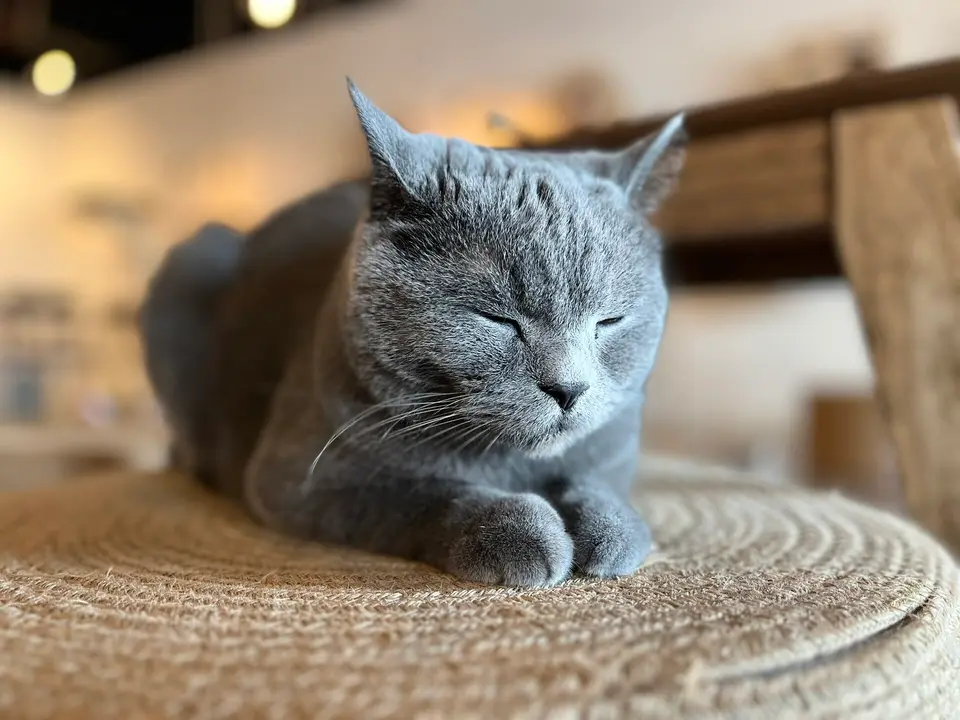
The British Shorthair is the round-faced, plush-coated cat many people picture when they think of a classic blue-gray house cat. It is calm, quiet and affectionate without being clingy, and its short coat is easy to care for. It also has a few breed-specific health points, including kidney screening and an unusual blood-type profile, that every prospective owner should know.
British Shorthair quick facts
| Trait | What to expect |
|---|---|
| Origin | Great Britain; shown at London's Crystal Palace cat shows around the turn of the 20th century; first exported to the US in the early 1900s (CFA) |
| Weight | Males may grow as large as 17 lbs; females are somewhat smaller (CFA). VCA lists 6–12 lbs (VCA) |
| Coat | Short, very dense, firm and plush; blue is the best-known color, but many solids, bicolors and tabbies exist (CFA) |
| Lifespan | VCA lists 15–20 years (VCA); a UK veterinary-records study found a median age at death of 11.8 years in 69 cats (O'Neill et al.) |
| Activity level | Low to moderate: quiet and sedate, per CFA; VCA calls it moderately active |
| Grooming | A quick combing or brushing once a week; more during seasonal shedding (CFA) |
| Maturity | Slow to mature; full size around three years (CFA) |
As with most breeds, lifespan data are limited. The UK study's median is based on cats seen in general practice, and many individuals live well beyond it.
A short history
CFA's breed profile describes the British Shorthair as the modern descendant of cats dating back to Roman times in Britain. The two World Wars badly depleted the breed, and breeders rebuilt it by crossing in Persians and "moggies," the British term for ordinary random-bred shorthairs. That Persian influence matters today because it brought in at least one inherited kidney disease, covered below. In the US the breed was first registered as the "British Blue."
Temperament
The Cat Fanciers' Association describes British Shorthairs as calm, quiet and affectionate cats that bond with everyone in the household, are patient with children and generally adjust well to dogs and other pets. CFA also notes two traits worth knowing in advance: they may withdraw when the household gets loud, and many dislike being carried. They often prefer to sit beside you or watch from across the room rather than curl up in a lap. VCA describes the breed as smart, loyal, somewhat reserved and rarely vocal.
For a family, that means a cat that is easy to live with but that should be allowed to set the pace of contact.
Care needs
Grooming. The dense coat needs less work than a long coat but does shed. CFA says most owners find a quick weekly combing enough, along with regular nail trims and occasional ear cleaning.
Weight. VCA advises measuring food portions to keep British Shorthairs from becoming overweight. Ask your veterinarian to score your cat's body condition at each visit.
Gentle activity. A quiet cat still needs daily play to stay fit. Wand toys, food puzzles and window perches work well; see our indoor cat enrichment ideas.
A calm home base. Because the breed can retreat from noise, give it a quiet room or high perch to escape to. Our guide to creating a cat-friendly home has practical ideas.
Known health concerns and genetic tests
CFA's breed profile reports no breed-specific health concerns and credits the breed's diverse genetic background. Veterinary sources do flag three issues to discuss with any breeder.
Polycystic kidney disease (PKD)
PKD causes fluid-filled cysts to form in the kidneys and grow over time, often leading to kidney failure. Cornell Feline Health Center says it occurs mainly in Persians and occasionally in breeds such as the British Shorthair. Because of past Persian crosses, a genetics review by Leslie Lyons states that British Shorthairs also need PKD screening.
A DNA test detects the best-known PKD1 variant, and ultrasound can find cysts directly. Cornell notes that ultrasound is the only way to make a definitive diagnosis, and that a genetic test won't tell you how severely a cat is affected. In a large 2026 Japanese study of genetically tested pedigreed cats, the PKD1 variant was found in about 0.99% of British Shorthairs born in 2019. That is low, but unlike several other breeds, the British Shorthair showed no decline over the study period, and the authors urged continued testing.
Hypertrophic cardiomyopathy (HCM)
Cornell lists the British Shorthair among breeds predisposed to hypertrophic cardiomyopathy, a thickening of the heart muscle. Unlike Maine Coons and Ragdolls, there is no breed-specific DNA test, and the ACVIM consensus guidelines advise against using the Maine Coon and Ragdoll tests in other breeds. Screening relies on echocardiograms (heart ultrasounds) performed by an experienced veterinarian.
Vet check: Fast or labored breathing at rest, open-mouth breathing, or sudden hind-leg weakness or pain can signal heart disease. Seek emergency veterinary care right away.
Blood type B
Cats have blood types, mainly A and B. CFA notes that type A predominates in cats overall but that many British Shorthair lines carry type B. A review of feline blood groups reported type B in 57.1% of 105 British Shorthairs tested in the UK and 58.8% of 85 tested in the US. This matters in two ways. The review explains that blood typing is the only way to make sure a cat receives compatible blood in a transfusion, and the same naturally occurring antibodies can cause a serious reaction in newborn kittens, called neonatal isoerythrolysis, which is a concern for breeders. Ask your veterinarian to record your cat's blood type.
Are British Shorthairs good family cats?
Often, yes, especially in calmer households. CFA describes them as patient with children and tolerant of other pets. The main adjustment for kids is respecting that many British Shorthairs don't want to be picked up. Teach children to invite the cat over with a toy or an outstretched hand and to pet while the cat stays on the floor. Our guide to teaching children to interact safely with cats covers this by age. Always supervise infants and toddlers around cats.
How to find a British Shorthair responsibly
- Try rescue first. Breed-specific rescues and shelters occasionally have British Shorthairs or look-alike mixes. See our guide to adopting a rescue cat.
- Ask breeders for records. Request PKD results for both parents, echocardiogram reports, blood types and the kitten's vaccination history. CFA suggests asking for any health guarantee in writing.
- Avoid kitten mills and pet stores. CFA cautions that pet-store kittens may come from "kitten mills" with poor breeding practices and advises against taking home kittens younger than 8 weeks.
- Watch for scams. Be wary of sellers who won't video chat, demand payment by gift card or wire transfer, or push to ship a kitten you've never seen.
Is a British Shorthair right for you?
This breed may suit you if:
- You want a calm, quiet companion that is affectionate on its own terms.
- You prefer easy weekly grooming over daily brushing.
- Your household is relatively peaceful, or children are old enough to follow "no carrying" rules.
- You're prepared to ask breeders hard questions about PKD, heart screening and blood type.
It may not be ideal if you want a lap cat that loves to be held, an energetic playmate, or a cat for a loud, busy home. A calm adult domestic shorthair from a shelter can offer a similar easygoing personality.
The bottom line
British Shorthairs are steady, low-drama cats with an easy-care coat and a reserved kind of affection. Their health checklist is short but specific: PKD screening, heart ultrasounds and blood typing. This article is general information; your veterinarian should guide decisions about your individual cat's health.
Common questions
Do British Shorthairs like to be held?
Many don't. CFA notes British Shorthairs are affectionate but often dislike being carried and tend to supervise from nearby rather than sit in laps. Let them choose how close to be.
How much grooming does a British Shorthair need?
Usually a quick combing or brushing once a week, with more during seasonal shedding, plus regular nail trims and occasional ear checks.
What health tests should a British Shorthair breeder do?
Ask about PKD testing (DNA test and/or kidney ultrasound), heart screening by echocardiogram, and blood typing. There is no breed-specific DNA test for HCM in British Shorthairs.
Why does blood type matter for British Shorthairs?
Type B blood is far more common in this breed than in most cats. Knowing your cat's type matters if it ever needs a transfusion, and it matters to breeders because blood-type antibodies can cause a serious reaction in newborn kittens.
Sources
- British Shorthair - The Cat Fanciers' Association, The Cat Fanciers' Association
- British Shorthair | VCA Animal Hospitals, VCA Animal Hospitals
- Polycystic Kidney Disease, Cornell Feline Health Center
- Hypertrophic Cardiomyopathy, Cornell Feline Health Center
- Feline Genetics: Clinical Applications and Genetic Testing, Topics in Companion Animal Medicine (PMC)
- Widespread genetic testing controls inherited polycystic kidney disease while avoiding inbreeding in cats, BMC Genomics (PMC)
- The Feline AB Blood Group System and its Importance in Transfusion Medicine, Journal of Feline Medicine and Surgery (PMC)
- ACVIM consensus statement guidelines for the classification, diagnosis, and management of cardiomyopathies in cats, Journal of Veterinary Internal Medicine (PMC)
- Longevity and mortality of cats attending primary care veterinary practices in England, Journal of Feline Medicine and Surgery (PMC)
- Finding the Purr-fect Pedigreed Kitten, The Cat Fanciers' Association
Written and fact-checked by the Only Hope Cats editorial team against the sources listed above. Read our editorial policy, or tell us about an error.