This is general health information checked against veterinary sources. It isn't a diagnosis or a substitute for advice from a veterinarian who knows your cat. If your cat may be ill or poisoned, call your vet or the ASPCA Animal Poison Control Center at (888) 426-4435 (a fee may apply).
If you are browsing adoptable cats and see "FIV+" on a profile, you may hesitate. That hesitation is understandable, and it is also why FIV-positive cats often wait longer for homes than they need to. Current veterinary guidelines paint a far more hopeful picture than the old stereotypes. This guide explains what FIV and FeLV are, how they differ, what test results mean, and how to decide whether a retrovirus-positive cat is right for your home.
FIV and FeLV at a glance
Both are retroviruses that infect only cats, and both affect the immune system. They behave very differently, though, and the practical advice for each is different.
| FIV (feline immunodeficiency virus) | FeLV (feline leukemia virus) | |
|---|---|---|
| Main way it spreads | Deep bite wounds | Close, prolonged contact: mutual grooming, shared bowls and litter boxes, bites; mother to kittens |
| Risk to people or dogs | None; infects only cats | Does not spread to people |
| Typical outlook | Many cats live a normal lifespan | More serious; Cornell puts median survival after diagnosis at about 2.5 years |
| Living with uninfected cats | Usually fine in calm households where cats don't fight | Best as an only cat or with other FeLV-positive cats |
| Vaccine in the US | Not commercially available in North America since 2016 | Available; core for kittens and cats under 1 year |
Sources: Cornell Feline Health Center, Merck Veterinary Manual, and the 2020 AAFP Feline Retrovirus Testing and Management Guidelines. The AAFP also offers a plain-language client brochure and toolkit on both viruses.
What FIV is and how it spreads
Feline immunodeficiency virus slowly weakens a cat's immune system over time. According to the Merck Veterinary Manual, a newly infected cat may run a fever and have swollen lymph nodes, then look completely healthy for months or years. Infection is lifelong, and over time immune function usually declines, leaving some cats more prone to other infections and certain blood cancers.
FIV spreads mainly through saliva in deep bite wounds, which is why Merck notes that outdoor cats and male cats are more likely to be infected. Cornell notes that casual contact such as sharing water bowls or grooming each other is not an efficient route of transmission, and that passing the virus from mother to kittens is rare.
Myth: "FIV is feline AIDS, so it's dangerous to my family." FIV is sometimes compared to HIV because the viruses are related, but Merck is clear that FIV only infects cats and does not affect people.
What FeLV is and how it spreads
Feline leukemia virus is the more serious of the two. It spreads through saliva and other secretions during close, repeated contact: grooming, shared food dishes and litter boxes, and fights. Cornell and Merck both note that infected mothers can pass it to kittens before birth or through nursing, and kittens are most vulnerable.
Exposure can lead to three outcomes, which is why FeLV results can be confusing:
- Abortive infection: the cat's immune system clears the virus and the cat tests negative.
- Regressive infection: the virus is held in check and is not actively replicating, but it can reactivate later, for example if the cat's immune system is suppressed.
- Progressive infection: the virus keeps replicating, the cat can infect others, and the prognosis is poorest.
Merck lists anemia, lymphoma and other cancers, immune suppression and severe mouth inflammation among the problems FeLV can cause. Cornell puts median survival after diagnosis at about 2.5 years, with longer survival in cats with regressive infection. Some FeLV-positive cats live comfortably for several years, so a positive test is a reason for careful planning, not automatic despair.
Testing: what adopters should know
The AAFP guidelines recommend testing every cat for both viruses when it is first acquired, before its first FeLV vaccine, after any possible exposure (such as a bite from an unknown cat), and whenever it becomes ill. If the shelter or rescue has tested the cat, ask for the results, the type of test and the test date.
A few details matter when you read a result:
- FIV tests look for antibodies, not the virus itself. A cat tested soon after exposure may not have made antibodies yet, so Cornell recommends retesting about 60 days later.
- Kittens can test FIV-positive from their mother's antibodies. These maternal antibodies can last up to 6 months. The AAFP guidelines say kittens that still test positive after 6 months of age are likely truly infected; a PCR test can help sooner.
- FIV-vaccinated cats test positive on standard antibody tests. The vaccine is no longer sold in North America, but cats from other countries or with unknown histories may have received it, so vaccination history matters.
- A positive FeLV screening test is usually rechecked. Cornell notes that retesting 6 to 12 weeks later helps distinguish progressive from regressive infection, and your veterinarian may use additional tests to confirm.
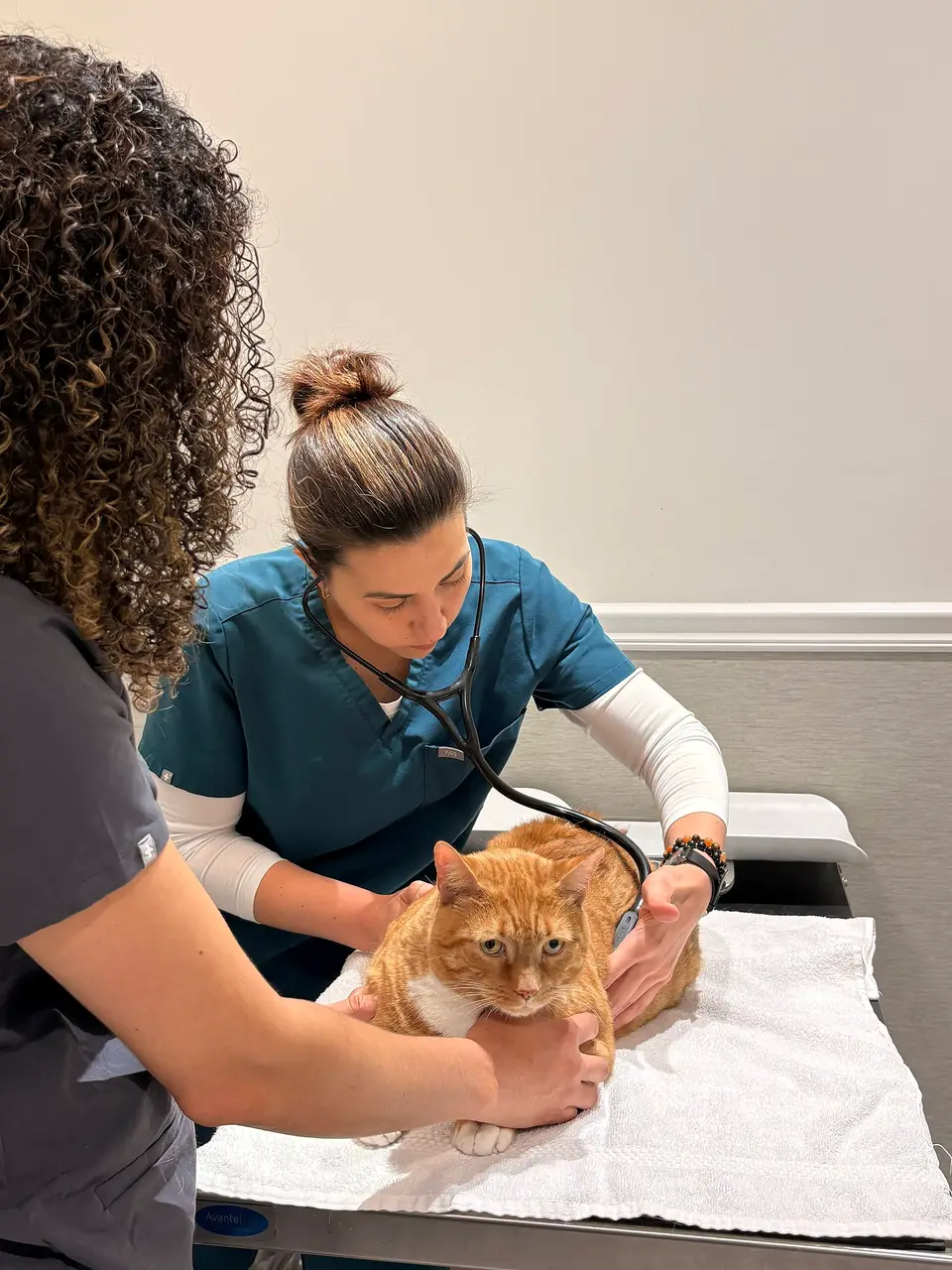
Vet check: If you adopt a cat with a positive or uncertain result, schedule a veterinary visit within the first week or two. Ask which confirmatory tests were done, what your cat's baseline bloodwork shows, and how often to schedule checkups.
Why FIV-positive cats make wonderful companions
The most important message in current guidance is that FIV is usually a manageable condition, not a short countdown.
- Normal lifespans are common. Cornell reports that many infected cats live normal lifespans, especially when they are not also infected with FeLV. The AAFP guidelines say FIV-positive cats may experience normal longevity with appropriate care.
- They can often share a home with other cats. In stable households where cats do not fight, the AAFP guidelines describe the risk to uninfected cats as negligible. Best Friends Animal Society notes that FIV-positive and FIV-negative cats can live together as long as neither is a fighter.
- They are no risk to people or dogs. The virus is specific to cats.
- Retrovirus status should not decide a cat's fate. The AAFP guidelines state that a retrovirus diagnosis should not be the sole reason for euthanasia, and that there is no medical reason to exclude infected cats from shelter adoption rooms when they are housed appropriately.
If you are open to an adult cat, our guide to adopting an adult cat vs. a kitten can help, and Where to Find Adoptable Cats Near You explains how to search.
Living arrangements that work
FIV-positive cats
- Can live with FIV-negative cats in calm households. Avoid adding an FIV-positive cat to a home where cats already scuffle, and do not add new cats to a home where fighting is a problem.
- Introduce cats gradually. Best Friends suggests keeping cats in separate rooms until you are confident they won't fight; our step-by-step guide to introducing two cats walks you through it.
- Should be spayed or neutered, which Best Friends notes can reduce fighting.
FeLV-positive cats
- The AAFP guidelines recommend adopting FeLV-positive cats into homes only as single cats or with other FeLV-positive cats, because the virus spreads through everyday contact.
- Vaccinating resident cats lowers risk but does not protect every cat, so the guidelines favor preventing direct contact.
For both
- Keep cats indoors. The AAFP guidelines recommend indoor living, with outdoor time limited to a secure enclosure such as a catio. This protects the infected cat from other infections and protects neighborhood cats.
Everyday health care for retrovirus-positive cats
Cornell's management advice for FIV-positive cats is a good template for both infections:
- Wellness exams about every six months, with bloodwork at least yearly, so problems are caught early.
- Prompt attention to illness. Infections, dental disease and weight loss deserve a quicker call to the veterinarian than they might for other cats.
- A complete and balanced diet, without raw meat, raw eggs or unpasteurized dairy, as Cornell advises. See our guide to cat nutrition.
- Routine parasite control, which Merck lists as part of supportive care.
FeLV vaccination for kittens
Unlike FIV, FeLV can be prevented with a vaccine in the US. The AAFP guidelines recommend:
- Testing the kitten for FeLV first.
- Two doses, the first as early as 8 weeks of age and the second 3 to 4 weeks later.
- One booster a year after the initial series.
- After that, further boosters based on the cat's lifestyle and exposure risk.
Merck notes that FeLV is considered a core vaccine for cats under one year old and a non-core vaccine for low-risk adults. Cornell adds that the vaccine does not protect every cat and does not cause false-positive tests. It also does nothing for a cat that is already infected, which is why testing comes first.
Questions to ask before adopting a retrovirus-positive cat
- Which tests were done, and when? Was a positive result confirmed?
- How does this cat get along with other cats?
- What health problems, if any, has the cat had in care?
- Does the shelter or rescue offer post-adoption support or a contact for questions?
Our guide to how to adopt a rescue cat covers the rest of the adoption process.
The bottom line
FIV is spread mainly by serious bites, poses no risk to people, and is compatible with a long, normal life for many cats, including in homes with other peaceful cats. FeLV is more serious and spreads more easily, so FeLV-positive cats do best as only cats or with other positive cats, and kittens should be tested and vaccinated. If an FIV-positive cat catches your eye, the evidence supports giving that cat a real chance. This article is general information; your veterinarian should guide testing, vaccination and care decisions for your own cats.
Common questions
Can an FIV-positive cat live with FIV-negative cats?
Often, yes. The 2020 AAFP retrovirus guidelines describe the risk to uninfected cats as negligible in stable households where cats do not fight, because FIV spreads mainly through deep bite wounds. Introduce cats slowly and talk with your veterinarian about your household.
How long do FIV-positive cats live?
Many FIV-positive cats live normal lifespans with good preventive care, according to Cornell Feline Health Center and the AAFP guidelines. The outlook is less favorable once a cat develops severe or repeated illnesses, or if it also has FeLV.
Can people or dogs catch FIV or FeLV?
No. FIV infects only cats and does not affect people, and FeLV does not spread to people, according to the Merck Veterinary Manual. Both viruses are spread between cats.
Should my kitten get the FeLV vaccine?
Current guidelines treat FeLV vaccination as core for kittens and cats under one year old: two doses starting as early as 8 weeks, a booster one year later, then further boosters based on lifestyle risk. Kittens should be tested before vaccination.
Sources
- 2020 AAFP Feline Retrovirus Testing and Management Guidelines, Journal of Feline Medicine and Surgery (via PubMed Central)
- 2020 AAFP Feline Retrovirus Management Guidelines, American Association of Feline Practitioners
- Feline Immunodeficiency Virus (FIV), Cornell Feline Health Center
- Feline Leukemia Virus, Cornell Feline Health Center
- Feline Immunodeficiency Virus (FIV) - Cat Owners, Merck Veterinary Manual
- Feline Leukemia Virus (FeLV) - Cat Owners, Merck Veterinary Manual
- FIV in Cats: Feline Immunodeficiency Virus FAQs, Best Friends Animal Society
Written and fact-checked by the Only Hope Cats editorial team against the sources listed above. Read our editorial policy, or tell us about an error.